21 December 2015

Giving You // Creative Living


When I started planning this post, it was going to be about Christmas traditions for the family, but as I explored the idea, a lot of the suggestions were consumer-based, and it felt a little hollow. The act of giving always seems poignant at this time of year, when we take stock of what we have. So here are my top ideas for creating traditions in giving at Christmas.

While making festive biscuits to leave out for bin men and neighbours, and putting together a gift box for Operation Christmas Child can be a lovely thing to do with children, we can all take things a little further by supplying homeless people with winter essentials, and getting a little extra on our Christmas shop for the food bank. These are all very easy things to do, that can cost as much or as little as you like - every penny really does help when it comes to the less fortunate.

So in this true Christmas spirit, we wish you all a magical Christmas, filled with love and laughter.

*The studio is now closed for the festive period and will re-open on Monday 11th January 2016*

Image Sources: Biscuits The 36th Avenue, Christmas Child Garrett With Sim, Homeless (unknown source), Food Bank (unknown source)

14 December 2015

'Small' Books For Big Imaginations // Inspiring The Small

Quote from The Bear's Song (below).

Books are massive in our house - both of us being huge book worms, and eager to encourage the same passion in our small. We already have a modest collection of very special books, most of which were (gratefully) recommended by Lori, over on her blog Wild & Grizzly. Here, we are sharing 4 of our favourites that resonate with all 3 of us - not just from a plot perspective, but a creative one too.


The Encyclopedia of Pehistorica Dinosaurs (by Robert Sabuda and Matthew Reinhart) is a treasure trove of imagination and expert craft. Every page is packed with information, surrounding a 3D paper construction of a dinosaur that leaps out at you as you turn the page. It is a work of art as much as anything else, and this is why this book is such a success. It captivates, intrigues, draws you in, to rather a hands-on approach to learning about these incredible creatures. Our small is enthralled by this book - he enjoys role-play with these paper masterpieces as well as lifting the many hidden mini pop-ups that can be found throughout the book. As huge lovers of paper, this book is a massive hit in our household for not only our small, but us as well.


The Bear's Song (by Benjamin Chaud) is one of those rare books that combines a really comforting, beautiful tale of love between father and son, with magnificent illustrations. The large size of the book really celebrates the work of the artist, and the smell of the ink on the beautiful uncoated stock is just such a joy. Everything about this book sticks in your mind - from the soothing earthy palette and charming illustrations, to the attention to detail, the feel of the stock and the magical story - you just know this is one of those books that will remain in your child's memory forever.


In The Forest (by Anouck Boisrobert, Louis Rigaud and Sophie Strady) is such an important book for educating children on the impact of deforestation and the power of human actions - bad and good. With beautiful pop-up 3D paper constructions throughout, this vibrant, fun, yet poignant book leads us through nature and all it's beauty, teaching us about respect and the fragility of our world. Our small enjoys role-play with the diggers, and getting involved in the 'regrowth' of the forest that had been destroyed.


The Highstreet (by Alice Melvin) is like a record of our highstreets, as they once were, at a time when we are struggling to hold on to them. The book takes us on a colourful, playful journey down the highstreet, to tick off items on Sally's shopping list - presented with joyful illustration and printed on beautiful uncoated stock. Together, we come across all strange and wonderful things along the way, in this interactive book, which includes liftable flaps on every page, taking you into each shop. Not only does this book feel important to show our children the highstreet as it once was, and may never be again, but it also contains subtle lessons on consumerism, which we also feel is so important today.

07 December 2015

Anyone Can Design A Logo // In The Studio


I remember something my driving instructor told me 15 years ago, he said that anyone can drive, but not everyone can drive well. I guess that made me want to be part of the ‘can drive well’ group. It challenged me, and driving well is something I  still take pride in today (you know, indicating at roundabouts, headlights at dawn/dusk (but I can see!), not tailgating etc.)

Now logo design isn’t driving, and you can’t learn to do it in 10 hours. But it is something that can be done well, and not so well. Anyone can type a business name into a computer and add a piece of clipart next to it. Even websites themselves can now ‘design’ a logo for you, one website for instance took just seconds to design over 250 logos! Seeing what it generated was a fun game to play, but the chance that it would produce something of value is like the chance of the UK having a summer with wall-to-wall sunshine everyday, it’s just not going to happen.

So, what should a logo be? I think that a logo needs to be three main things:

• Simple. This will help it to be instantly recognisable, which means that it is more likely to be memorable. If it’s not memorable in some way, it’s not doing it’s job.

• Appropriate. It must have a purposeful reason for it’s form, typography, and colour choices. This will help it to convey something unique about the business, or just simply help it target the right people.

• Unique. This helps your business to stand out from the crowd, so customers can easily tell you apart from other businesses. Similar to the way a person’s unique features, such as their eyes, help them to stand out.

Designing a logo is a process that asks questions. Some questions will be simple to answer, like what is it that the business does, and who are their target market? Others will be more difficult to answer as it involves more of a decision, a choice of direction has to be made, like what sort of personality does the business want to convey?

Research must be done into business competitors, this helps the designer to spot trends or potential similarities to avoid such as icons, typefaces, and colours used (after all, a logo should be unique, to help you stand out). The research should also extend into the industry itself, as ideas can often be triggered by anything from historical facts to the equipment used, or even the local geography.

The actual design process can only start after these initial stages, as without these stages all you can go on is a business name, which on it’s own can give very little away. Amazon for instance… rainforest management?  The logos would look a lot different if the designers hadn’t asked even the most obvious questions, or carried out the most basic research. For example, take a look at the recent 'rebrand' for Amazon, provided by an online logo design generator. I’ve made it look like a before and after slide from my favourite logo design blog Brand New, just to help highlight the difference between the original, and the ‘redesigned’ logo. The new logo is fairly simple, I'll give it that, but it certainly isn't appropriate (it was designed 'blind' after all), and unique is definitely not a word I'd use to describe it.

So, although anyone can design a logo, it does not mean that it is going to be good. Ultimately, the designers you choose to design your new logo must care about the end result, care enough to ask the right questions, and strive to craft something that leaves you, the client, happy. However, a logo cannot be called good simply because more money was spent on it, or bad because it was cheap. It is however, wise to invest in the design of your logo as it will become the cornerstone of your business, it’s most recognisable element, as your face is to you, your logo is to your business. As a general rule, you will get what you pay for, but getting a feel for a designer / studio before committing would be wise. Read about them, view past projects, see what they are saying on their social pages, and finally email or call them to double check that they live up to their perceived quality. You will then be able to sit back and enjoy the ride, as having your logo designed should be an enjoyable process to experience.

30 November 2015

Hemp Protein Bars // Good Food


Vegan, naturally sweet, chocolatey and moreish, these hemp bars have become a staple in our household for both us and our small to enjoy. Taken from our favourite recipe book The Green Kitchen, and modified to suit our tastes, these bars are an instant, nourishing energy hit on many a busy adventure.

Dry Ingredients

1 cup (160 g) pumpkin seeds

1 cup (100 g) dried shredded coconut

1/2 cup (80 g) hemp seeds

4 tbsp chia seeds


6 tbsp rolled oats

2 tbsp poppy seeds

Wet Ingredients

20 dates (pitted
)
6 tbsp coconut oil (room temperature)

4 tbsp cocoa powder

1 tsp vanilla extract

Preperation
Roughly chop the pumpkin seeds (or you can leave whole if preferred). Mash the dates with a fork until they are sticky and smooth as caramel.

Method
Mix together all ingredients, adding one by one, and kneed by hand until well combined.
Spread the batter evenly into a 11 x 7-inch (28 x 18 cm) baking dish, pressing down to compact. Place in the fridge for about 30 minutes. Cut into bars and store in an airtight container in the fridge. Will keep around a week.

Image and original recipe The Green Kitchen

23 November 2015

The 5 Senses Of Christmas // Creative Living


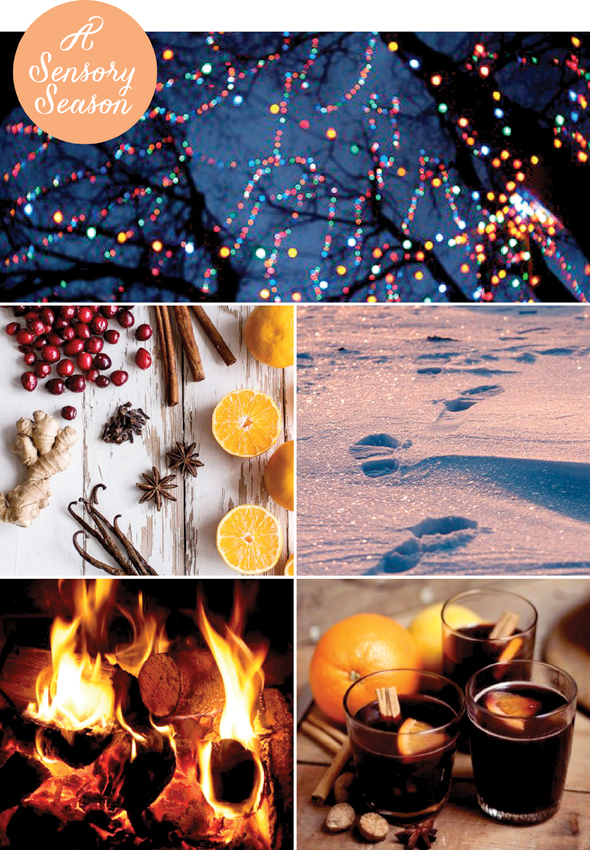
As we near the end of November, thoughts are turning to Christmas. It is such a sensory season isn't it? As the dull days and dark nights draw in, we have started thinking about what stirs our 5 senses at Christmas...

Sight - Traditional rainbow fairy lights clinch it for us. There is nothing more nostalgic at Christmas than the beautiful, warm lights that were so heavily featured in our childhood Christmases.  

Smell - Cinnamon, nutmeg and cloves, are spices that are so prominent at Christmas, and feature heavily in the scent of our home during the festive period - whether in our cooking or in our decor. Warming, comforting, calming and homely.

Sound - Silence. The silence of snow. When we wake up and everything is so silent that we just know. Snow has fallen. As we peel back the curtain, the excitement bubbles up inside of us just the same as it did when we were children - it never goes. And the beauty - it never ceases to stagger.  

Touch - Warmth. The feel of warmth as we enter our home on a winters day. The feel of the flickers of heat, radiating from the licking flames. Pure bliss after a wintry walk.

Taste - Of all the tastes of Christmas, mulled wine is always the most prominent. It has the funny ability to soothe us at the same time as making us feel celebratory.

What stirs your senses at Christmas?

Christmas Lights (source unknown), Spices Half Baked Harvest, Snow (source unknown), Log Fire (source unknown), Mulled Wine Adeline and Lumiere

17 November 2015

Stocking Treasures // Inspiring The Small


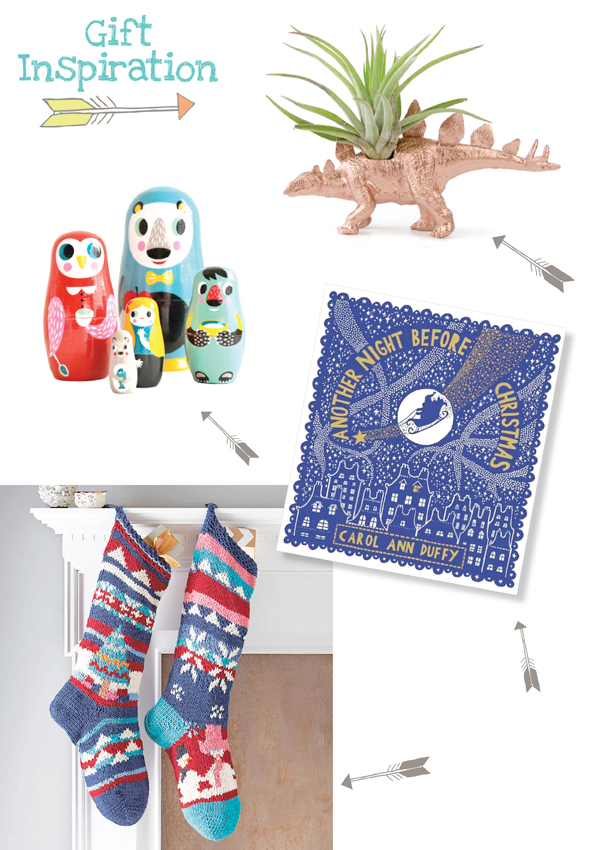
Dinosaur Planter Ohh Deer, Woodland Nesting Dolls Tigerlilly Quinn, Another Night Before Christmas Rob Ryan, Knitted Scandinavian-Style Stockings Not On The High Street

There is nothing more exciting than finding unusual things to inspire our small with. These are a few of our purchases so far, all ready to be wrapped and tucked into that special stocking.

It feels great to buy from and support small independents when possible, and you really feel that sense of value - they are not things that you would necessarily find anywhere else.

We hope that these inspire you as you start to think about stocking ideas this Christmas.

09 November 2015

Books for Designers // In The Studio

At a time when we are looking to expand our studio book collection, we've been reflecting on our favourite reads on our shelf.

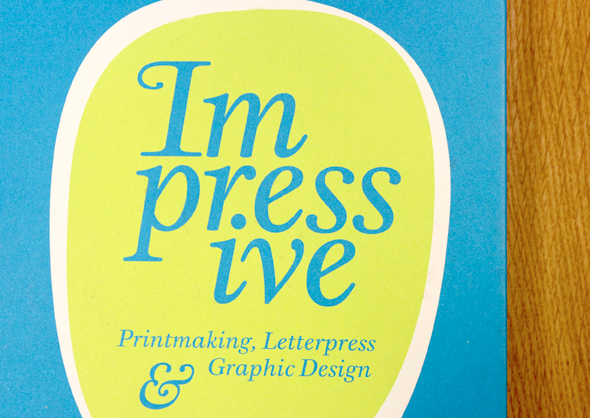
Impressive

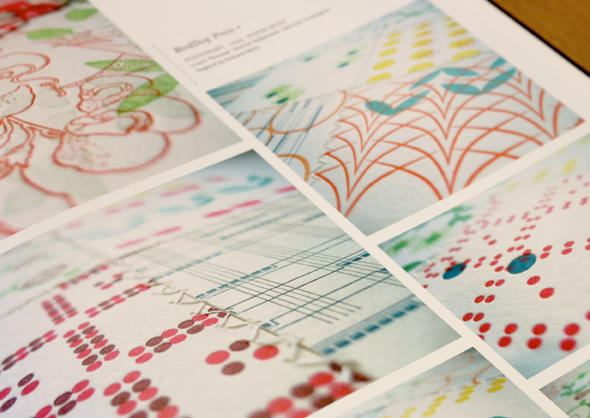
Impressive is a Printmaking, Letterpress and Graphic Design book, absolutely brimming with visual inspiration from creatives who are using old-fashioned techniques to create cutting-edge work. It is a topical exploration of the interplay between current trends in graphic design and traditional handiwork such as letterpress printing. This is an essential book for print-loving designers like us.


How to be a graphic designer, without losing your soul

Written by Adrian Shaughnessy, this book is a practical and inspirational user's guide for designers. It offers guidance on employment options straight out of college, setting up as a freelance, establishing a firm, finding and keeping clients, pitching, and generally doing good work. It was a great purchase back when we were looking to start Leaff, and an easy reference point when we were on our feet, but it still serves as a good read even now.


Obey The Giant

This is a book by Rick Poynor - an acclaimed design writer. It is a really rich source of knowledge on the communication of design and branding, on every level - even levels that you hadn't perhaps considered before. It is in this way that Poynor exposes what is really beneath the surface of contemporary visual culture, which shows how designers and image-makers both collude with, and resist, corporate control of the image world.


Do you own any really inspiring books that you couldn't do without? We would love to hear about them - they may be just what we are looking for to expand our own collection.
Related Posts Plugin for WordPress, Blogger...